
May 2025

Hack Without Code?

Hack Without Code? The Truth About No-Code Cyber Attacks

Hack Without Code? The Truth About No-Code Cyber Attacks INTRODUCTION One of the most chilling trends in the constantly evolving world of cybersecurity is the increasing trend of no-code cyber attacks. The name “Hack Without Code?” would seem oxymoronic at first, considering that the majority of cyberattacks in the past have required an extensive understanding of coding and programming. However, with the faster pace of development of no-code tools and platforms, even those with very limited to no technical expertise can now exploit vulnerabilities and conduct sophisticated cyberattacks. This blog explores the new frontier of no-code cyber attacks, their mechanism, and how individuals and companies can protect themselves against them. We are going to walk you through the mechanism of these attacks, their implications, and provide some useful tips on how to protect your digital assets from this emerging threat. What Are No-Code Cyber Attacks Traditionally, cyber attacks such as hacking, phishing, or malware installation required a minimum level of technical proficiency. Hackers would require coding, exploiting software vulnerabilities, and detailed system and network know-how. But with no-code platforms, the books are being rewritten. No-code platforms are programs that allow people to develop websites, applications, and even workflows without writing a single line of code. As capable as these software tools are in reaching non-technical users within the realm of developing software, they have unwittingly introduced new types of cyberattacks to the fold. Hack Without Code? The answer is a resounding yes—attackers now have the ability to use these platforms to launch attacks without possessing advanced coding skills. Examples of No-Code Cyber Attacks Social Engineering using Automation: Automation of social engineering methods is supported by no-code platforms, such as phishing e-mails or impersonated websites aimed at tricking users into providing sensitive information. Phishing attacks on a large scale can be developed by attackers through these platforms. Malware Distribution: Attackers can develop malicious software or tools that spread malware without coding complicated code. By using no-code development platforms, cybercriminals can spread malware through email attachments, spoofed applications, or social media links. Abusing API Vulnerabilities: Integration with APIs is available in most no-code platforms, and APIs are usually vulnerable and susceptible to attacks. API attacks can be automated by cybercriminals using these platforms to gain unauthorized access to databases or other sensitive systems. How No-Code Cyber Attacks Are Performed To understand the significance of Hack Without Code?, one needs to see how these attacks are carried out. No-code platforms have made it easy for even novice hackers to create advanced attacks in a few steps. Let’s see how no-code cyberattacks typically unfold. 1. Using No-Code Automation for Phishing Attacks Previously, phishing used to be sending out spoofed websites or emails to trick users into sharing sensitive information. But with no-code platforms like Zapier and Integromat, attackers can automate these attacks, sending thousands of emails with personalized content that’s difficult to distinguish from actual communication. This increases the success rate and allows attackers to run phishing campaigns without needing to write complex code. 2. Creating Phantom Sites and Landing Pages Low-code website development platforms such as Wix, Webflow, or Squarespace enable anyone to create professional websites. Cyber attackers have started to use these sites for creating phantom sites or landing pages that look like reputable brands or organizations. By luring users to a site, attackers can steal the login credentials, payment details, or other secrets. 3. Exploiting Low-Code Platform Weaknesses Although no-code platforms are designed to be user-friendly, they also have their vulnerabilities. Hackers can exploit such vulnerabilities to gain unauthorized access to backend systems. Some no-code tools, especially those with APIs embedded, might lack the security features they require to defend against attacks. Why Is This Trend Gaining Traction There are several reasons why Hack Without Code is on the rise.  1. Ease of Use of No-Code Platforms The rise in popularity of no-code systems has made it possible for anyone to create advanced applications or automate processes without worrying about technicality. While this makes software development accessible to more individuals, it also makes it easier for cyber attackers to exploit the vulnerabilities of these systems for ill. 2. Automation No-code tools allow automation of processes that were previously requiring human intervention. Phishing campaigns, data scraping, or brute-force attacks can be automated by cybercriminals with minimal effort. This allows them to target more individuals with fewer resources. 3. Lack of Awareness and Training Most firms are unaware of the potential risks that no-code platforms pose to them. Employees with minimal information about the security aspect use no-code tools most of the time. Lack of adequate cybersecurity training, especially on no-code automation, leaves firms vulnerable to attacks. 4. Low Barrier to Entry Unlike technical hacking, which requires high technical skill, no-code cyberattacks have low barriers to entry. Anybody on a no-code platform can be an attacker because it has low technical requirements. This is a tremendous threat to companies and individuals. The Risks and Consequences of No-Code Cyber Attacks No-code cyber attacks pose different risks that can be disastrous to companies and individuals. Some of the most significant risks are: 1. Data Breaches With no-code tools, attackers can quickly obtain access to sensitive data through phishing or API attacks. This can result in mass-scale data breaches, customer data, financial data, and intellectual property being exposed. 2. Financial Loss Ransomware and scams are standard attacks in the no-code world of cyber attacks. Cybercriminals can lock businesses out of critical systems and demand a ransom, or they can use automated software to initiate unauthorized withdrawals from clients. 3. Reputation Damage If a company gets hacked through a no-code cyber attack, its reputation can suffer. Customers may lose trust, resulting in missed business opportunities, legal problems, and long-term financial losses. 4. Legal Consequences Lack of proper protection of user information and systems will subject the business to legal consequences, especially if a breach entails the loss of personally identifiable information (PII). Regulatory authorities like GDPR require businesses to implement strict cybersecurity to protect data. How

Hack Without Code? The Truth About No-Code Cyber Attacks Read More »
Your Company Was Hacked

Your Company Was Hacked Now What? Know It All

Your Company Was Hacked Now What? Know It All INTRODUCTION With the modern digital age, cyber attacks are not a future issue anymore today they are an everyday threat. Daily, companies worldwide are being attacked by hackers who have high-tech ways of breaking into computers. As ready as you may be for such attacks, there is always the possibility that your company got hacked. If that does happen, it is very important to know what has to be done next to contain the damage, safeguard your information, and secure your future. In this step-by-step guide, we’re going to take you through all the procedures that you need to follow when your business is breached. From identifying the breach right through to recovering your assets, we’re going to cover everything that you need to do in order to deal with a cyber attack in a professional and effective manner. Understanding the Breach: What Happened? The first step when your company was hacked is understanding what happened and what type of attack you’ve experienced. Cyberattacks can vary greatly in nature, and identifying the right one helps determine the next steps. Types of Cyberattacks: Data Breaches: This is among the most prevalent forms of cyberattacks, whereby hackers gain unauthorized access to confidential data such as customer data, financial data, and intellectual property. Such an attack is usually employed for identity theft, fraud, or selling confidential data on the dark web. Ransomware: Ransomware attacks occur to high-value companies with the hope that they will pay in order to regain valuable files or systems. Phishing Attacks: Attackers use social engineering to deceive employees into revealing confidential information such as login credentials or financial information.  Denial-of-Service (DoS) and Distributed Denial-of-Service (DDoS): These attacks try to flood your website or network with excessive traffic, making them inaccessible to users. Symptoms of a Breach: Abnormal system performance, e.g., slowness or sudden crashes. Unauthorised logon or alteration of user accounts. Unauthorised network traffic or data usage spikes. Difficulty in accessing files or programs (likely ransomware attack). New programs or files appearing where they should not. The instant you observe any indication of cyber attack, begin to investigate right away. Time is of the essence in the case of cyber attack. Knowing the type of attack can prevent further damage. Immediate Steps to Take After Your Company Was Hacked Once you’ve confirmed that your company was hacked, swift action is critical. Here are the first steps to take immediately: 1. Contain the Breach Disconnect Affected Systems: Isolate compromised computers or servers from the network to stop the hacker from accessing more data or spreading the attack. Shut Down Internet Access: If at all possible, log off the internet to prevent the hacker from reaching your systems remotely. 2. Evaluate the Damage Conduct a Methodical Investigation: Collaborate with your IT staff or an external cybersecurity professional to determine the extent of the breach. Determine what data and systems have been compromised. Determine What Was Compromised: Search for sensitive information such as customer data, employee data, or sensitive business information. 3. Inform Key Stakeholders Internal Teams: Inform your internal cybersecurity, IT, and crisis management teams about the breach. Customers: If customer data were exposed, inform those affected at the same time and give them instructions on how to look after themselves. Regulatory Authorities: In some circumstances, you might be obligated to inform local or international regulatory authorities, such as GDPR regulators or other privacy regulators. Being Familiar with Legal and Compliance Obligations Hackers are also punishable by law, and your business can be obligated to report the hack to authorities based on the severity of the attack. In certain countries, such as the European Union with GDPR (General Data Protection Regulation), you have to report the affected authorities within 72 hours of when the breach was found. Legal Compliance Steps After a Hack Notify Data Protection Authorities: If the breach concerns personal data, your organization may be required to notify data protection authorities under data protection regulations such as GDPR or CCPA (California Consumer Privacy Act). Document the Incident: Document everything that has happened, i.e., when you first learned of the breach, what actions you took, and any announcements you issued to stakeholders. Consult Legal Counsel: Hire a cybersecurity lawyer to guide you through the legal ramifications of the breach and ensure compliance with reporting and mitigation. How to Stop Additional Damage After Your Business Got Hacked Now that you have contained the breach, now is the time to shift gears to preventing additional damage. This is how you reclaim control over your systems: 1. Secure Your Network Change Passwords: Change all passwords, particularly those for important accounts. Turn on multi-factor authentication (MFA) where applicable. Patch Vulnerabilities: Collaborate with your IT department to find and patch any vulnerabilities the hacker took advantage of. Update Software: Update all your software, operating systems, and apps to reduce vulnerabilities. 2. Bring in a Cybersecurity Expert Hire an Incident Response Team: If there has been a serious breach, it is worth hiring a professional cyber security firm or incident response team to assist with investigating, fixing and recovering from the hack. Forensic Analysis: A forensic analysis will identify what happened during the hack and can assist you in being made aware of vulnerabilities within your security systems. Communicating with Customers and Clients A crucial part of recovering from an attack is restoring trust with your customers. Your company was hacked, and your clients need reassurance that their data is safe and that you’re taking steps to prevent future incidents. Best Practices for Customer Communication: Be Transparent: Notify your customers of the breach as soon as possible. Provide clear details on what was compromised and the steps you’re taking to resolve the issue. Offer Support: Provide resources such as credit monitoring services for customers whose data was impacted. Reassure Them: Highlight the measures you’re implementing to strengthen cybersecurity and protect against future threats. Maintaining a Strong Future Cybersecurity Plan Having contained the breach, it is now

Your Company Was Hacked Now What? Know It All Read More »

How Hacktivism Is Changing the New Cyber Attack Landscape

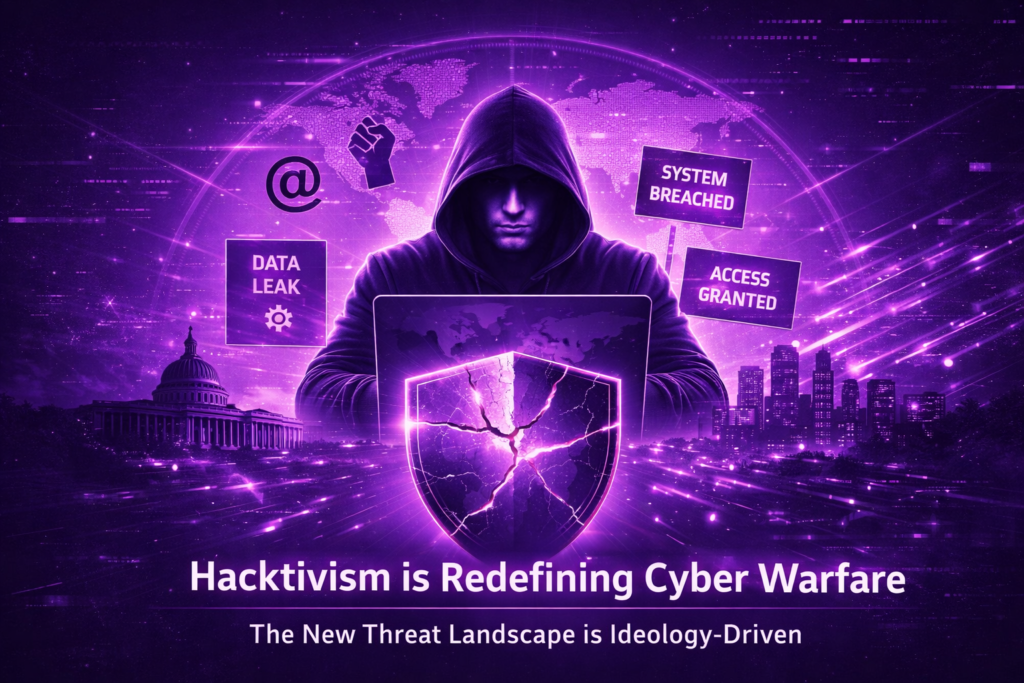
How Hacktivism Is Changing the New Cyber Attack Landscape The cyber threat landscape in 2026 is undergoing a fundamental transformation. Cyberattacks are no longer driven only by financial motives. A growing wave of hacktivism is reshaping how organizations are targeted, attacked, and exposed. Hacktivists are using cyberattacks as a tool for activism to promote ideologies, challenge governments, and hold organizations accountable. This shift has made cyber threats more unpredictable, more visible, and often more damaging to reputation than traditional attacks. Hacktivism is turning cybersecurity from a technical risk into a business, political, and reputational challenge. What is Hacktivism? Hacktivism is the combination of hacking and activism. It refers to cyber activities carried out to support political, social, or ideological causes. Expose sensitive or hidden information Disrupt digital services Influence public perception Challenge governments or corporations Unlike cybercriminals, hacktivists are not always motivated by money. Their primary goal is impact and visibility. Common Hacktivist Attack Techniques DDoS Attacks Hacktivists overwhelm systems with traffic to disrupt services and make platforms unavailable. Website Defacement Attackers alter websites to display political or ideological messages, directly targeting brand image. Data Leaks Confidential data is exposed publicly to embarrass organizations or reveal alleged wrongdoing. Social Engineering Manipulating employees to gain unauthorized access remains a powerful and commonly used method. Why Hacktivism is Increasing in 2026 Rising geopolitical tensions and digital warfare Global, decentralized hacker communities Increased demand for corporate transparency Easy access to attack tools and platforms Hacktivism is no longer isolated it is coordinated, global, and highly strategic. Impact on Businesses Operational disruption and downtime Severe reputational damage Loss of customer trust Regulatory and legal consequences Even a single hacktivist attack can significantly impact brand perception and business continuity. How Businesses Should Respond Implement real-time monitoring and detection Strengthen incident response readiness Conduct continuous vulnerability assessments Monitor brand exposure and data leaks Secure third-party and vendor access Organizations must move beyond traditional security and prepare for ideologically driven threats. Conclusion Hacktivism is redefining cybersecurity in 2026. It is no longer just about protecting systems it is about protecting reputation, trust, and business continuity. Stay Ahead of Modern Cyber Threats Connect with Lumiverse Solutions to strengthen your cybersecurity posture against emerging hacktivist threats. Book a Free Consultation FAQ: Hacktivism in 2026 What is hacktivism? Hacktivism is the use of hacking techniques to promote political, social, or ideological causes. Why is hacktivism growing? Due to global conflicts, social movements, and increased digital connectivity, hacktivism is rising rapidly. How does hacktivism affect businesses? It can lead to downtime, data exposure, reputational damage, and financial loss. Recent Posts March 24, 2026 What is a Cloud Security Assessment and Why Does Your Business Need One? March 17, 2026 How Penetration Testing Can Improve Your Business’s Cybersecurity Culture March 10, 2026 How Network Security Assessments Saved Businesses from Cyber Attacks March 3, 2026 How Geopolitical Conflicts Increase Cyber Risk for Indian Businesses February 24, 2026 AI Innovation vs Cyber Risk: What Businesses Must Learn from the 2026 AI Summit Categories Cyber Security Security Operations Center Cloud Security Case Study Technology Trends Don’t Let Cyber Risks Disrupt Your Business Growth Certified Cybersecurity & Compliance Experts: 12+ years of industry experience delivering VAPT, ISO 27001, SOC 2, and regulatory compliance aligned with global standards. Proven Real-World Cyber Expertise: 850+ cybercrime cases investigated and 1500+ cybersecurity audits conducted across enterprises and regulated industries. Strengthening People, Processes & Technology: 4500+ cybersecurity awareness sessions delivered to reduce human-layer risks and improve organizational cybersecurity. End-to-End Security Partner: From advanced penetration testing to global compliance frameworks, Lumiverse Solutions ensuring businesses stay secure, compliant, and confidently future-ready. Secure. Comply. Scale with Confidence. Book Your free Consultation → India: +91 77986 60940 / +91 7397 882 579 UAE: +971 58 585 6233

How Hacktivism Is Changing the New Cyber Attack Landscape Read More »

When Cybersecurity Meets Privacy

When Cybersecurity Meets Privacy Navigating the New Fine Line

When Cybersecurity Meets Privacy Navigating the New Fine Line INTRODUCTION Today, in an era of computers and the internet, when cybersecurity and privacy cross paths, it has never been more important to balance data security and the preservation of individual rights. While the internet brings us together in ways previously unimaginable just a short time ago, data privacy and cybersecurity are now two pillars essential to the online world. In an era where nearly everything we do is recorded electronically, how do we protect our information and keep it secure, and how do businesses protect this information from unwelcome cyber attacks? The gap between privacy and cybersecurity is less clear today, but they are equally important. This blog will explore the thin line between these two elements, how they interact, and how individuals and businesses can protect their data in the proper manner. As threats evolve with each passing day, it is important to understand how cybersecurity collides with privacy in terms of approaching the digital sphere safely. Chapter 1: The History of Cybersecurity and Privacy The Emergence of Cybersecurity Cybersecurity, actually, is the process of ensuring that networks, systems, and data are excluded from attacks or intrusion. While reliance on the internet keeps on growing, states and companies have invested enormous resources into cybersecurity in order to ensure prevention from malware, ransomware, data intrusion, and other harmful attempts. Cybersecurity goes beyond defense—there is so much more involved in ensuring integrity, availability, and confidentiality over the internet. As threats evolve, so do models of cybersecurity. Where privacy converges with cybersecurity, this is a question of balancing between the protection of data and protecting individual rights in managing their data. The Role of Privacy in the Age of the Internet Privacy, on the other hand, is actually all about the way in which personal data is collected, stored, and used. Social media, big data, and the proliferation of networked devices have made it more difficult to preserve privacy. Governments and institutions are collecting more data about individuals than ever before. But privacy is not simply a matter of keeping people’s data out of the hands of thieves; it’s about people being able to control their own data, and their data being used responsibly and with their consent. With increasing worries about surveillance, hacking, and misuse of data, understanding when cybersecurity meets privacy can be the game-changer in protecting information. It is a thin line where technology, policy, and ethics must come together. Chapter 2: The Intersection of Cybersecurity and Privacy The Blurred Line Between Cybersecurity and Privacy At face value, cybersecurity and privacy seem like two distinct disciplines: one is to protect systems and networks, and the other is to protect individual data. Reality is more complex. The intersection of cybersecurity and privacy is where data protection is a shared endeavor—protecting not only digital infrastructure but also confidentiality and trust of individuals. Cybersecurity offers a promise that criminal players cannot enter or manipulate systems and information. Privacy offers a promise that people’s personal information are handled ethically and with dignity. When privacy and cybersecurity combine, there is a requirement for a holistic approach to not only protect against cyber attacks but also to ensure that data usage complies with legal and ethical standards. Key Regulations Shaping the Intersection There are a few laws around the world that demonstrate the crossing of paths between cybersecurity and privacy: GDPR (General Data Protection Regulation): GDPR, the European Union’s data privacy law, is one of the most stringent data privacy legislations. It mandates organizations to protect users’ personal data through cybersecurity as well as privacy. In combining privacy and cybersecurity, GDPR makes companies adopt positive measures in securing user data against unauthorized use. CCPA (California Consumer Privacy Act): CCPA is yet another crucial regulation that discusses how organizations are required to handle personal information. CCPA focuses on the importance of privacy, security, and privacy protection. Cybersecurity processes must be combined with privacy policies in order to meet these requirements. HIPAA (Health Insurance Portability and Accountability Act): In the healthcare sector, HIPAA requires strict controls on both privacy as well as cybersecurity in order to protect sensitive health data. These regulations clearly identify the extremely intimate connection between cybersecurity and privacy, emphasizing how these two practices need to evolve along with each other. Chapter 3: Risks to Privacy and Cybersecurity Threats Cybersecurity Threats Having an Impact on Privacy The context for online threats is evolving, as too is the impact of these threats on privacy. When privacy and cybersecurity are combined, organizations must consider both the integrity of their infrastructure and the protection of sensitive personal data. Data Breaches: The most significant threat to privacy from cybersecurity is data breaches. When intimate personal information like credit card numbers, passwords, or medical information is leaked, security and privacy are compromised. Malware and Ransomware: Malicious software that freezes or steals data can be devastating. Ransomware attacks, in particular, extort data and violate users’ privacy. Such attacks are typically a blow to privacy and reveal the vulnerabilities of an organization’s cybersecurity setup. Phishing Attacks: Phishing attacks trick users into sharing personal information by making them think a legitimate source has sent a message. Cyberattackers primarily use phishing as a stepping stone to gaining access to sensitive information, which both violates cybersecurity and privacy measures. Spyware: Software secretly monitoring individuals’ activity on their computers and stealing personal information violates both security and privacy. The Impact of Data Misuse on Privacy While cybersecurity focuses on not granting unauthorized access, privacy concerns come into play where information is misused or mismanaged after it is collected. Misuse of personal information can involve selling it to third parties without authorization or using it for targeted advertising in ways infringing on people’s privacy expectations. Where privacy and cybersecurity meet, it is no longer a question of protecting information from the outside world but ensuring that organizations handle data in a responsible and ethical manner. A good cybersecurity system has to protect privacy as well

When Cybersecurity Meets Privacy Navigating the New Fine Line Read More »