Cyber Security

Active Directory Security Assessment: Hidden Misconfigurations That Put Organizations at Risk

Active Directory Security Assessment: Hidden Misconfigurations That Put Organizations at Risk Most organizations invest in firewalls, antivirus, endpoint protection, and even advanced threat monitoring. Yet, one of the most critical systems in their infrastructure often remains overlooked: Active Directory (AD). For many businesses, Active Directory is the backbone of identity and access management. It controls: User authentication Access permissions Domain policies Privileged accounts Enterprise-wide access controls But here’s the problem: 👉 Attackers love Active Directory. Why? Because once compromised, it can provide access to an organization’s entire network, sensitive data, systems, and privileged accounts. The harsh reality is that many organizations unknowingly operate with misconfigured Active Directory environments, making them vulnerable to privilege escalation, ransomware, credential theft, and lateral movement attacks. This is where an Active Directory Security Assessment becomes essential. What is an Active Directory Security Assessment? An Active Directory Security Assessment is a cybersecurity evaluation that identifies vulnerabilities, misconfigurations, weak permissions, privilege escalation risks, and security gaps within an organization’s Active Directory environment. Why is Active Directory Security Important? Why do organizations need Active Directory security? Organizations need Active Directory security because AD manages authentication and permissions across systems, making it a high-value target for cybercriminals seeking unauthorized access to sensitive infrastructure. Think about it: If attackers gain control over Active Directory, they can potentially: Access sensitive files Escalate privileges Disable security controls Move laterally across systems Deploy ransomware organization-wide This makes Active Directory one of the most business-critical attack surfaces in enterprise environments. Why Cybercriminals Target Active Directory Active Directory is often called the “keys to the kingdom” in cybersecurity. According to the Microsoft Active Directory Security Best Practices, organizations should continuously monitor and secure privileged access paths to reduce identity-related cyber risks. Why? Because it stores: User credentials Group policies Access permissions Privileged accounts Domain administration settings Once attackers compromise AD, they can impersonate users and gain deeper access. Why do hackers target Active Directory? Hackers target Active Directory because it centralizes authentication, access permissions, and administrative privileges, making it one of the fastest ways to compromise an organization’s network. Real-World Example: How an AD Misconfiguration Leads to a Breach Imagine this scenario: An employee’s credentials are compromised through phishing. Because of weak Active Directory permissions: The attacker accesses a low-privilege account Exploits excessive permissions Moves laterally across systems Gains domain administrator access Deploys ransomware Result? Operational downtime Financial loss Compliance penalties Reputation damage All because of one hidden misconfiguration. Top Hidden Active Directory Misconfigurations That Put Organizations at Risk Most organizations don’t realize their Active Directory environment has security gaps. Here are the most common risks: 1. Excessive User Permissions Many organizations grant users more access than necessary. Risks: Unauthorized access Privilege abuse Insider threats Best Practice: Follow the principle of least privilege (PoLP). 2. Weak Password Policies Weak passwords remain one of the biggest AD vulnerabilities. Examples include: No password complexity Password reuse Weak expiration policies Best Practice: Implement: Strong password enforcement Multi-factor authentication (MFA) 3. Dormant or Unused Accounts Former employees or inactive accounts often remain enabled. Risks: Attackers exploit forgotten accounts. Best Practice: Regular account audits. 4. Privileged Account Mismanagement Too many domain admins = increased risk. Risks: Compromised privileged accounts lead to complete network takeover. Best Practice: Restrict privileged access. 5. Misconfigured Group Policies Poorly configured Group Policy Objects (GPOs) can weaken security. Risks: Reduced visibility Insecure configurations System vulnerabilities 6. Kerberos & Delegation Misconfigurations Attackers exploit Kerberos vulnerabilities to escalate privileges. Example attacks: Kerberoasting Golden Ticket attacks These attack techniques are commonly documented within the MITRE ATT&CK Framework, which maps real-world adversary behaviors and privilege escalation methods used by threat actors. 7. Lack of Monitoring & Logging Many organizations lack visibility into suspicious AD behavior. Without monitoring: Threats go undetected. Organizations implementing continuous monitoring through SOC as a Service solutions gain better visibility into identity-based attacks and suspicious authentication activity. What are common Active Directory vulnerabilities? Common Active Directory vulnerabilities include excessive permissions, weak password policies, inactive accounts, privileged access mismanagement, insecure Group Policies, and lack of monitoring. Active Directory Security Assessment vs Identity Access Management (IAM) This is a common confusion. Active Directory vs IAM Active Directory is a Microsoft-based directory service for authentication and access management, while IAM is a broader framework managing identities and access across systems, applications, and cloud environments. Active Directory IAM Microsoft-specific Broad framework On-prem identity Cloud + hybrid Authentication Governance + access 👉 Organizations often require both. How an Active Directory Security Assessment Works A proper assessment goes beyond basic scanning. 1. Discovery & Enumeration Security teams identify: Domains Users Privileged accounts Trust relationships 2. Permission Analysis Evaluating: Excessive permissions Delegation weaknesses Access risks 3. Misconfiguration Testing Checking: Weak Group Policies Password settings Kerberos vulnerabilities 4. Privilege Escalation Assessment Testing how attackers could gain admin access. Many organizations combine Active Directory assessments with VAPT Services to simulate real-world attack paths and identify exploitable weaknesses before cybercriminals do. 5. Security Reporting & Remediation Organizations receive: Risk report Severity analysis Fix recommendations How does an Active Directory security assessment work? An Active Directory security assessment identifies vulnerabilities, analyzes permissions, tests misconfigurations, evaluates privilege escalation risks, and provides remediation guidance. Signs Your Organization Needs an Active Directory Security Assessment You should strongly consider an assessment if: You haven’t audited AD in 12+ months You have hybrid or remote work environments Employees recently left the organization You manage privileged accounts manually You experienced phishing attempts If your organization uses Active Directory, security assessments should not be optional. Businesses also conducting broader Cybersecurity Risk Assessment exercises often identify identity security gaps that originate from poorly managed Active Directory environments. How Much Does an Active Directory Security Assessment Cost? What affects AD security assessment pricing? The cost of an Active Directory security assessment depends on the number of users, domains, infrastructure complexity, privileged accounts, and testing scope. Typical pricing factors include: Number of endpoints Multiple domains Hybrid cloud integration Compliance requirements Assessment depth Organizations searching for Active Directory security assessment services in Mumbai, Pune, Nashik, Bangalore, or across
Active Directory Security Assessment: Hidden Misconfigurations That Put Organizations at Risk Read More »

Patch Management: The Most Ignored Cybersecurity Risk That Leads to Data Breaches

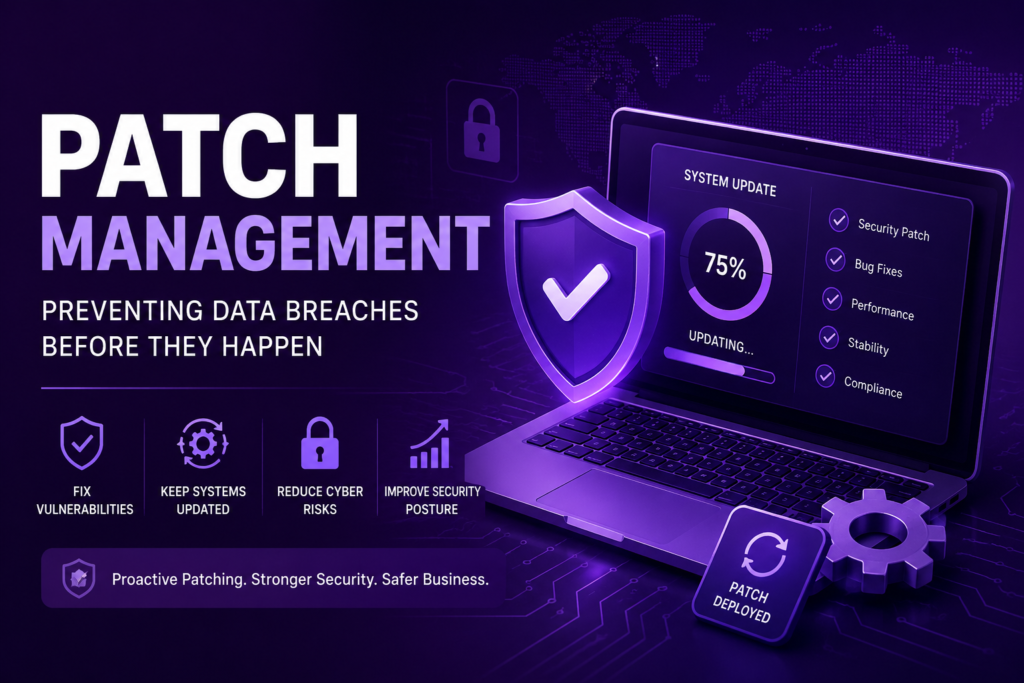
Patch Management: The Most Ignored Cybersecurity Risk That Leads to Data Breaches Most cyberattacks do not begin with sophisticated hacking. They begin with something much simpler: 👉 An unpatched vulnerability. Organizations invest heavily in firewalls, antivirus, endpoint security, and compliance frameworks but often ignore one of the most fundamental cybersecurity practices: patch management. A delayed software update, outdated operating system, or forgotten application patch can become an open door for cybercriminals. In today’s threat landscape, attackers actively scan systems for known vulnerabilities, especially those organizations that delay updates. The question is no longer: “Should businesses patch systems?” It is: “How quickly can businesses patch vulnerabilities before attackers exploit them?” This is where patch management services become a critical component of modern cybersecurity. What is Patch Management? Patch management is the process of identifying, testing, deploying, and monitoring software updates (patches) to fix vulnerabilities, improve performance, and secure systems against cyber threats. Why is Patch Management Important? Patch management is necessary because outdated systems contain known vulnerabilities that cybercriminals can exploit to gain unauthorized access, deploy ransomware, steal data, or disrupt business operations. Think about it this way: Every software vendor whether it’s Microsoft, Linux, VMware, Adobe, or enterprise applications regularly releases updates. These updates are not just about new features. Most patches fix: Security vulnerabilities Software bugs System performance issues Compliance gaps Failing to install them creates unnecessary risk. How Cybercriminals Exploit Unpatched Systems Hackers don’t always “hack” systems in the traditional sense. Sometimes they simply exploit vulnerabilities that organizations already know about but failed to fix. Example: A critical security vulnerability gets publicly disclosed. Within hours: Attackers create exploit scripts Automated bots scan the internet Vulnerable systems are identified Breaches happen This means organizations delaying updates even for a few days can become easy targets. Real-World Example: The Cost of Delayed Patching One of the biggest ransomware outbreaks globally spread because organizations failed to apply a publicly available security update. Despite patches being released months earlier, many systems remained exposed. The result? Massive operational downtime Financial losses Data breaches Reputational damage Can poor patch management lead to data breaches? Yes. Poor patch management is one of the leading causes of cybersecurity incidents because attackers commonly exploit known vulnerabilities in outdated systems and software. Common Risks of Poor Patch Management Organizations with weak patching practices often face: 🛑 Ransomware Attacks Unpatched vulnerabilities are one of ransomware’s favorite entry points. 🔓 Unauthorized Access Attackers exploit weak systems to gain administrator-level access. 📂 Data Breaches Sensitive business and customer data becomes exposed to cybercriminals. ⚖️ Compliance Violations Weak patching practices may lead to non-compliance with: ISO 27001 DPDP HIPAA GDPR ⏱️ Operational Downtime Security incidents and outages disrupt productivity and business continuity. Patch Management vs Vulnerability Management: What’s the Difference? This is one of the most common questions organizations ask. Patch management vs vulnerability management Patch management focuses on deploying software updates to fix vulnerabilities, while vulnerability management identifies, assesses, and prioritizes security weaknesses across systems. Think of it this way: Patch Management Vulnerability Management Fixes vulnerabilities Finds vulnerabilities Software updates Risk assessment Reactive implementation Proactive identification 👉 Strong cybersecurity requires both. What Does an Effective Patch Management Process Look Like? A mature patching strategy includes several stages. STEP 01 Asset Discovery Identify devices, servers, applications, cloud workloads, and endpoints. Devices Servers Applications Cloud Workloads Endpoints STEP 02 Vulnerability Identification Analyze missing patches, critical CVEs, and high-risk software versions. Missing Patches Critical CVEs High-Risk Versions STEP 03 Patch Testing Updates are validated before deployment to avoid operational disruption. STEP 04 Deployment Roll out patches systematically across enterprise infrastructure. Endpoints Servers Cloud Enterprise Apps STEP 05 Monitoring & Reporting Continuously monitor deployment success, remediation status, and emerging vulnerabilities. Successful Deployment Patch Remediation New Vulnerabilities How does patch management work? Patch management works by identifying vulnerable systems, testing updates, deploying security patches, and continuously monitoring environments to reduce cybersecurity risks. Common Patch Management Mistakes Businesses Make Many organizations unintentionally expose themselves because of poor patching habits. 1. Delaying Critical Updates Waiting weeks or months increases exposure. 2. No Centralized Visibility IT teams lack visibility into missing patches. 3. Manual Patch Deployment Manual patching increases human error. 4. Ignoring Third-Party Software Many breaches originate from: Browsers Plugins Productivity apps 5. No Testing Process Poorly tested patches can disrupt operations. Who Needs Patch Management Services? Which organizations need patch management? Any organization using connected devices, software, cloud infrastructure, or enterprise systems requires patch management to reduce cybersecurity risks. Industries that benefit the most: Healthcare Finance Manufacturing SaaS companies Government organizations E-commerce businesses In reality: If your business uses technology you need patching. How to Choose the Right Patch Management Service Provider Organizations planning to hire a managed patch management service provider should evaluate several factors. Look for: Automated patch deployment Vulnerability prioritization Endpoint visibility Integration with SOC monitoring Compliance reporting Real-time dashboards Businesses searching for managed patch management services in Mumbai, Nashik, Pune, Bangalore, or across India increasingly prefer providers that combine patching + continuous security monitoring. What Affects Patch Management Costs? Patch management pricing depends on the number of endpoints, infrastructure complexity, cloud environments, monitoring requirements, and compliance obligations. Key cost factors include: Number of devices Hybrid or cloud infrastructure Automation requirements Third-party software coverage Security monitoring integration Instead of treating patching as an expense, organizations should view it as a risk reduction investment. One prevented breach often saves significantly more than patching costs. Best Practices for Effective Patch Management Automate updates wherever possible Prioritize critical vulnerabilities Conduct regular vulnerability assessments Maintain an updated asset inventory Integrate patching with endpoint security and SOC monitoring Additional best practices: Adopt a risk-based patching approach Create patch deployment schedules Continuously monitor systems Test patches before deployment How Lumiverse Solutions Helps Organizations Stay Secure At Lumiverse Solutions, we help businesses proactively reduce cybersecurity risks through managed patch management services, vulnerability remediation, and continuous monitoring. Our Approach Includes: Patch risk assessment Endpoint & server patch management Vulnerability prioritization Automated deployment strategies SOC-integrated monitoring Compliance-ready reporting Whether you need support

Patch Management: The Most Ignored Cybersecurity Risk That Leads to Data Breaches Read More »

EDR explained

Endpoint Security & EDR Explained: Complete Guide to Protecting Devices from Cyber Threats

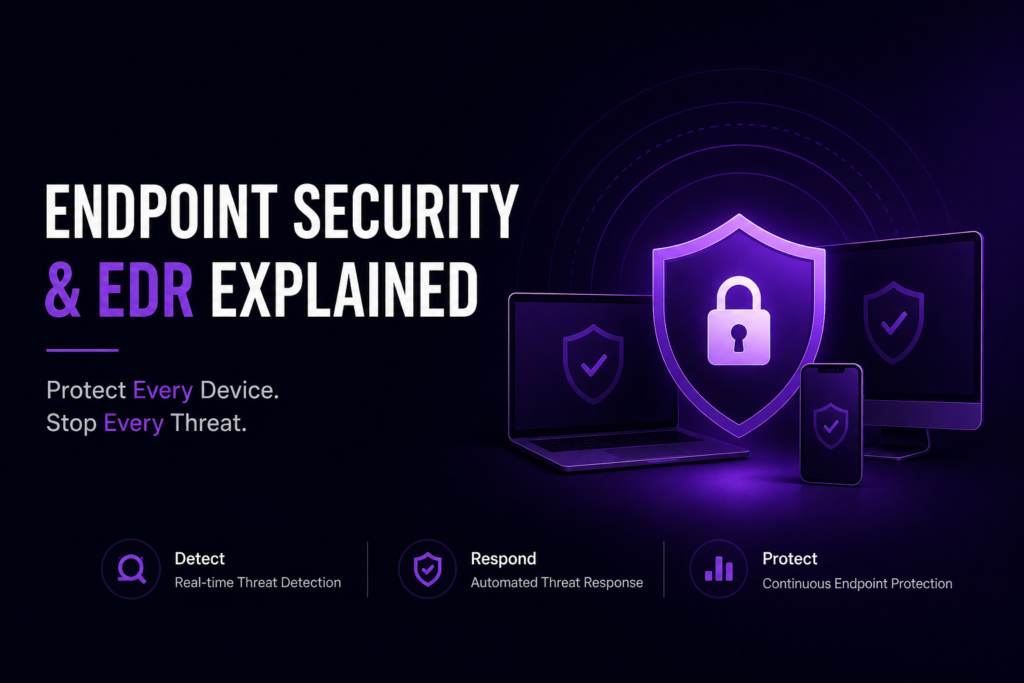
Endpoint Security & EDR Explained: Complete Guide to Protecting Devices from Cyber Threats Introduction: Your Biggest Security Risk is Sitting on Your Desk Every laptop, mobile device, server, or workstation connected to your network is an endpoint. Now imagine this: One compromised laptop = access to your entire system In today’s hybrid and remote work environment, endpoints have become the primary entry point for cyberattacks such as ransomware, phishing, and malware. Traditional antivirus is no longer enough. This is where Endpoint Security and EDR (Endpoint Detection & Response) play a critical role in protecting organizations from modern cyber threats. What is Endpoint Security? Endpoint security is a cybersecurity approach that protects devices like laptops, desktops, mobile devices, and servers from cyber threats using tools such as antivirus, EDR, encryption, and access control systems. What is EDR in Cybersecurity? EDR (Endpoint Detection and Response) is an advanced security solution that continuously monitors endpoint activities, detects suspicious behavior, and responds to threats in real time. Why Endpoint Security is Critical for Businesses Today 💡 Why is endpoint security important? Endpoint security is important because endpoints are the most common attack vectors, and a single compromised device can lead to data breaches, ransomware attacks, and system-wide compromise. Key Risks Without Endpoint Security: Unauthorized access to company data Ransomware attacks Phishing-based breaches Insider threats Data leakage According to industry reports, over 70% of breaches start at endpoints Endpoint Security vs Antivirus: What’s the Difference? 💡 EDR vs antivirus Antivirus detects known threats using signatures, while EDR provides real-time monitoring, behavioral analysis, and advanced threat detection to stop modern attacks. Feature Antivirus EDR Detection Signature-based Behavior-based Threat Response Limited Advanced Monitoring No Continuous Protection Level Basic Advanced Antivirus = basic protection EDR = complete security solution Common Endpoint Attacks You Must Know 1. Phishing AttacksEmployees click malicious links → attackers gain access 2. RansomwareFiles get encrypted → attackers demand payment 3. Malware & TrojansHidden programs steal data or control systems 4. Insider ThreatsEmployees misuse access (intentional or accidental) 5. Unpatched VulnerabilitiesOutdated systems become easy targets How EDR Protects Your Organization 💡 How does EDR work? EDR continuously monitors endpoint behavior, detects anomalies, investigates threats, and automatically responds to prevent attacks from spreading. Key Capabilities: 1. Continuous Monitoring – Tracks every activity on endpoints 2. Behavioral Analysis – Detects unusual patterns 3. Threat Detection – Identifies suspicious activity 4. Automated Response – Isolates infected devices & blocks attacks 5. Forensic Analysis – Understands how attacks happened Real-World Example: Endpoint Attack Scenario Without Endpoint Security Employee clicks phishing email Malware installs silently Data gets exfiltrated Breach discovered after days With EDR Suspicious activity detected instantly Endpoint isolated Attack stopped No data loss Damage prevented in real-time Best Practices for Endpoint Security Implement EDR solutions Regularly update and patch systems Enforce strong access controls Train employees Monitor endpoints continuously Practical Strategies: Use multi-factor authentication (MFA) Apply Zero Trust security model Enable device encryption Restrict admin access Deploy patch management system Endpoint Security Tools & Technologies Microsoft Defender for Endpoint CrowdStrike Falcon SentinelOne Buying Guide: How to Choose the Best Endpoint Security Solution 💡 How to choose endpoint security? Real-time threat detection AI/ML capabilities Scalability Integration with SOC Compliance support Who Needs Endpoint Security the Most? Startups & SaaS companies Enterprises with remote teams Healthcare organizations Financial institutions E-commerce businesses If you have devices connected to your network you need endpoint security. How Lumiverse Solutions Secures Your Endpoints At Lumiverse Solutions, we provide end-to-end endpoint security and EDR solutions tailored to modern businesses. Endpoint risk assessment EDR implementation & monitoring Patch management Threat detection & response 24/7 security monitoring (SOC integration) Take the Next Step with Lumiverse Solutions Don’t let one compromised device bring down your entire organization. Get your Endpoint Security Assessment today FAQs 1. What is endpoint security? Endpoint security protects devices like laptops and servers from cyber threats. 2. What is EDR? EDR detects and responds to threats in real time. 3. Why is antivirus not enough? It only detects known threats, not modern attacks. 4. How does endpoint security prevent attacks? It monitors, detects, and blocks threats early. 5. Is endpoint security necessary for small businesses? Yes, small businesses are frequent targets. Conclusion: Every Device is a Security Gateway Your cybersecurity is only as strong as your weakest endpoint. The solution is clear: Implement advanced endpoint security with EDR. Lumiverse Solutions — Protecting Every Device, Securing Every Business. Recent Posts May 5, 2026 Endpoint Security & EDR Explained: Complete Guide to Protecting Devices from Cyber Threats April 28, 2026 How SOC as a Service Prevents Cyber Attacks Before They Happen April 22, 2026 API Security Testing: Complete Guide to Vulnerabilities, Risks & Best Practices for Secure Applications April 14, 2026 ISO 27001:2022 Explained – ISMS Guide, Certification, Cost & Benefits (2026) April 7, 2026 DPDP Act 2023 Compliance for Organizations: Step-by-Step Guide, Importance, Penalties & Implementation Roadmap March 31, 2026 The Growing Importance of Robot Penetration Testing in Automated Industries March 24, 2026 What is a Cloud Security Assessment and Why Does Your Business Need One? March 17, 2026 How Penetration Testing Can Improve Your Business’s Cybersecurity Culture March 10, 2026 How Network Security Assessments Saved Businesses from Cyber Attacks March 3, 2026 How Geopolitical Conflicts Increase Cyber Risk for Indian Businesses Categories Cyber Security Security Operations Center Cloud Security Case Study Technology Trends Don’t Let Cyber Risks Disrupt Your Business Growth Certified Cybersecurity & Compliance Experts: 12+ years of industry experience delivering VAPT, ISO 27001, SOC 2, and regulatory compliance aligned with global standards. Proven Real-World Cyber Expertise: 850+ cybercrime cases investigated and 1500+ cybersecurity audits conducted across enterprises and regulated industries. Strengthening People, Processes & Technology: 4500+ cybersecurity awareness sessions delivered to reduce human-layer risks and improve organizational cybersecurity. End-to-End Security Partner: From advanced penetration testing to global compliance frameworks, Lumiverse Solutions ensuring businesses stay secure, compliant, and confidently future-ready. Secure. Comply. Scale with Confidence. Book Your free Consultation → India: +91 77986 60940 / +91 7397 882 579 UAE: +971 58

Endpoint Security & EDR Explained: Complete Guide to Protecting Devices from Cyber Threats Read More »

SOC as a service shield with lock

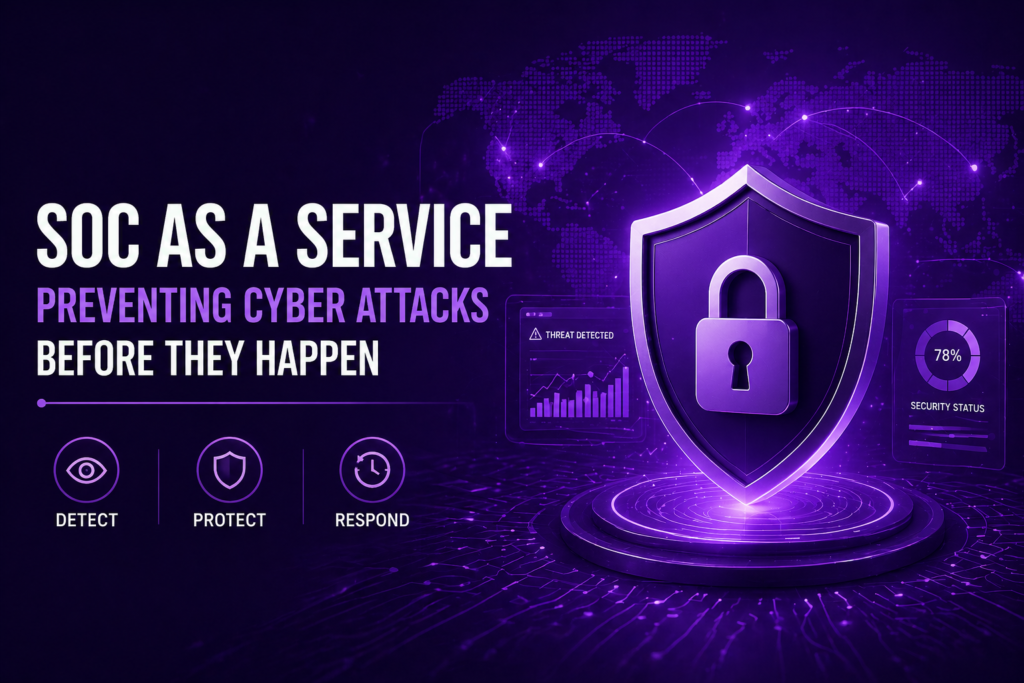
How SOC as a Service Prevents Cyber Attacks Before They Happen

How SOC as a Service Prevents Cyber Attacks Before They Happen Introduction: Cyber Attacks Don’t Wait: Why Should Your Security? Cyber attacks today don’t follow a schedule. They happen: At night On weekends During holidays And most importantly they happen within minutes. The harsh reality? Many organizations still rely on reactive security, discovering breaches only after damage is done. This is where SOC as a Service (SOCaaS) becomes a game-changer. Instead of reacting to incidents, SOCaaS enables businesses to detect, prevent, and respond to threats in real time before they escalate into full-scale attacks. What is SOC as a Service? (SOCaaS) SOC as a Service (SOCaaS) is a managed cybersecurity solution that provides 24/7 monitoring, threat detection, analysis, and incident response using advanced tools and expert security teams to protect organizations from cyber threats. Why Traditional Security is No Longer Enough 💡 Why is traditional cybersecurity not sufficient? Traditional cybersecurity tools like firewalls and antivirus are reactive and limited, making them ineffective against modern, sophisticated, and fast-moving cyber threats. The Problem with Traditional Security: No real-time monitoring Delayed threat detection Lack of skilled cybersecurity professionals Inability to handle advanced persistent threats (APTs) 👉 By the time a threat is detected, it’s often too late. How SOC as a Service Prevents Cyber Attacks 1. 24/7 Continuous Monitoring 💡 How does SOC provide real-time protection? SOC continuously monitors systems, networks, and endpoints to detect suspicious activity instantly and respond before threats escalate. Every login, request, and activity is tracked Suspicious behavior is flagged immediately No blind spots even after office hours 👉 Attackers don’t get unnoticed access 2. Early Threat Detection Using Advanced Analytics AI and machine learning Behavioral analytics Threat intelligence feeds 👉 This helps detect: Anomalous user behavior Unauthorized access attempts Data exfiltration patterns 💡 Example: If a user suddenly downloads large volumes of data at midnight, SOC flags it instantly. 3. Real-Time Incident Response 💡 What happens when a threat is detected? SOC teams immediately investigate, contain, and mitigate threats to prevent damage or escalation. Blocking suspicious IPs Isolating infected systems Revoking compromised access 👉 Response time = minutes, not hours 4. Threat Intelligence Integration 💡 What is threat intelligence? Threat intelligence is real-time data about emerging cyber threats, attack patterns, and vulnerabilities used to proactively defend systems. Detect known attack signatures Prepare for emerging threats Stay ahead of hackers 5. Automated Security Workflows (SOAR) 💡 What is SOAR? SOAR (Security Orchestration, Automation, and Response) automates repetitive security tasks and accelerates incident response. Faster containment Reduced human error Scalable security operations 6. Proactive Threat Hunting 💡 What is threat hunting? Threat hunting is the proactive process of identifying hidden threats within systems before they are detected by automated tools. Advanced persistent threats (APTs) Insider threats Undetected vulnerabilities Real-World Scenario: How SOC Prevents an Attack Situation: An attacker gains access to employee credentials through phishing. Without SOC: Unauthorized login goes unnoticed Data is stolen Breach discovered days later With SOC: Suspicious login detected instantly Access blocked Account secured Incident resolved within minutes 👉 Attack prevented before damage occurs Key Benefits of SOC as a Service 💡 What are the benefits of SOCaaS? SOCaaS provides continuous monitoring, faster threat detection, reduced response time, improved compliance, and cost-effective cybersecurity without requiring in-house expertise. 24/7 Protection Faster Detection & Response Cost Efficiency Access to Experts Compliance Support (ISO 27001, GDPR, DPDP) SOCaaS vs In-House SOC: Which is Better? Factor SOCaaS In-House SOC Cost Low High Setup Time Quick Long Expertise Included Needs hiring Scalability High Limited 👉 SOCaaS is ideal for most modern businesses Industries That Need SOC the Most Finance → Fraud detection Healthcare → Patient data protection E-commerce → Payment security SaaS & Tech → API & cloud protection Manufacturing → OT/ICS security Common Signs You Need SOCaaS Frequent security alerts Lack of visibility into threats No 24/7 monitoring Limited security team Growing compliance requirements 👉 If you relate to even one you need SOC How Lumiverse Solutions Delivers SOC as a Service 24/7 real-time monitoring AI-driven threat detection Rapid incident response Threat intelligence integration Continuous improvement & reporting 🚀 Take the Next Step with Lumiverse Solutions Don’t wait for a cyberattack to expose your vulnerabilities. 🔐 Get 24/7 protection 📊 Detect threats before they escalate ⚡ Stay ahead of cybercriminals 📞 +91 80106 33667 🌐 lumiversesolutions.online Conclusion: Prevention is Better Than Recovery Cybersecurity is no longer about reacting it’s about staying ahead. Organizations that rely on outdated, reactive systems will always be one step behind attackers. 👉 SOC as a Service changes the game by: Detecting threats early Responding instantly Preventing damage FAQs What is SOC as a Service? SOCaaS is a managed security service that provides continuous monitoring, threat detection, and incident response. How does SOC prevent cyber attacks? By detecting threats early, analyzing behavior, and responding in real time before attacks cause damage. Is SOCaaS suitable for small businesses? Yes, it is cost-effective and scalable, making it ideal for businesses of all sizes. What tools are used in SOC? SIEM, SOAR, threat intelligence platforms, and endpoint monitoring tools are commonly used. How quickly can SOC respond to threats? Most SOC teams respond within minutes, significantly reducing potential damage. Recent Posts April 28, 2026 How SOC as a Service Prevents Cyber Attacks Before They Happen April 22, 2026 API Security Testing: Complete Guide to Vulnerabilities, Risks & Best Practices for Secure Applications April 14, 2026 ISO 27001:2022 Explained – ISMS Guide, Certification, Cost & Benefits (2026) April 7, 2026 DPDP Act 2023 Compliance for Organizations: Step-by-Step Guide, Importance, Penalties & Implementation Roadmap March 31, 2026 The Growing Importance of Robot Penetration Testing in Automated Industries March 24, 2026 What is a Cloud Security Assessment and Why Does Your Business Need One? March 17, 2026 How Penetration Testing Can Improve Your Business’s Cybersecurity Culture March 10, 2026 How Network Security Assessments Saved Businesses from Cyber Attacks March 3, 2026 How Geopolitical Conflicts Increase Cyber Risk for Indian Businesses February 24, 2026 AI Innovation vs Cyber Risk: What Businesses Must

How SOC as a Service Prevents Cyber Attacks Before They Happen Read More »

API security

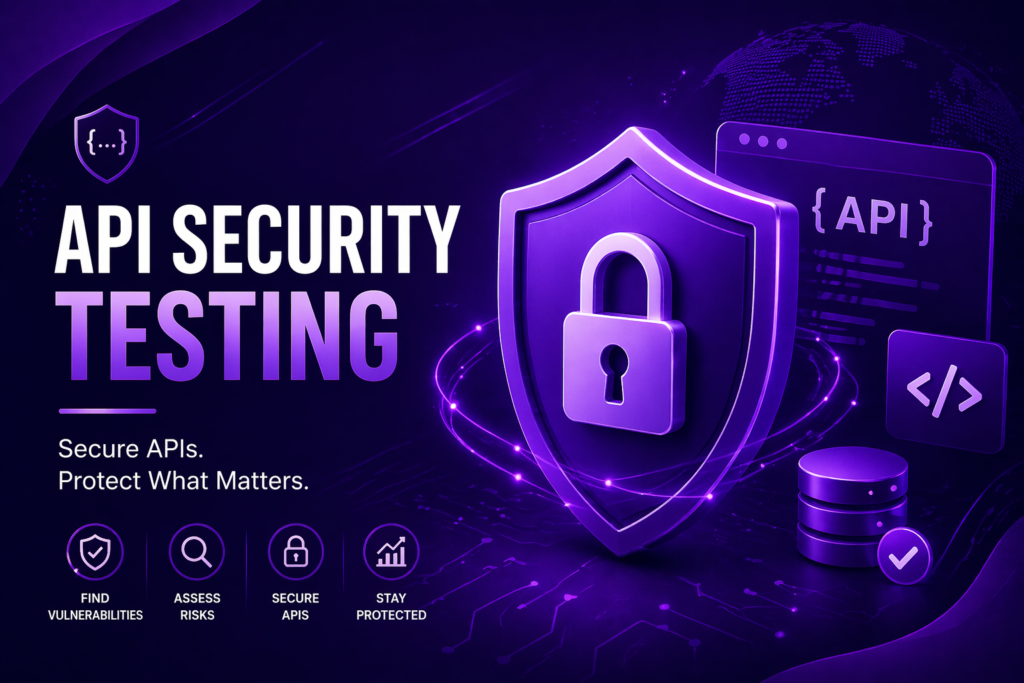
API Security Testing: Complete Guide to Vulnerabilities, Risks & Best Practices for Secure Applications

API Security Testing: Complete Guide to Vulnerabilities, Risks & Best Practices for Secure Applications Introduction: APIs Are Powering the Digital World But Also Exposing It APIs (Application Programming Interfaces) are the backbone of modern applications. From mobile apps and SaaS platforms to fintech systems and e-commerce websites: APIs enable seamless communication between systems. But here’s the problem: 👉 Every API endpoint is a potential entry point for attackers. As businesses rapidly scale their digital ecosystems, APIs often become the most overlooked yet most exploited attack surface. Recent studies show that over 80% of web traffic is API-driven, making API security not just important but critical. This is where API Security Testing comes in. What is API Security Testing? API security testing is the process of evaluating APIs to identify vulnerabilities, misconfigurations, and security flaws that attackers can exploit, ensuring that data exchange between systems remains secure and protected. Why API Security is Critical for Modern Businesses Why is API security important? API security is important because APIs handle sensitive data and system access; vulnerabilities can lead to data breaches, unauthorized access, and complete system compromise. Key Reasons: APIs Expose Sensitive Data User credentials Financial data Personal information Rapid Development = Weak Security APIs are often deployed quickly without proper security testing. Direct Access to Backend Systems Attackers can bypass UI layers and directly target APIs. Increasing Attack Sophistication Hackers now use automated tools and AI to exploit APIs at scale. Top API Security Vulnerabilities (Based on OWASP API Top 10) The OWASP API Top 10 highlights the most critical risks. 1. Broken Object Level Authorization (BOLA) 💡 What is BOLA? BOLA occurs when APIs fail to properly validate user permissions, allowing attackers to access unauthorized data. 👉 Example: Accessing another user’s account by changing an ID in the API request. 2. Broken Authentication 💡 What is broken authentication? Weak authentication mechanisms allow attackers to compromise user accounts through token theft or brute force attacks. 3. Excessive Data Exposure 💡 What is excessive data exposure? APIs expose more data than necessary, increasing the risk of sensitive information leaks. 4. Lack of Rate Limiting 💡 Why is rate limiting important? Without rate limiting, attackers can perform brute-force attacks or overload systems. 5. Security Misconfigurations Open endpoints Default credentials Improper headers 6. Injection Attacks SQL injection Command injection API parameter manipulation 7. Improper Asset Management Deprecated APIs still active Shadow APIs not monitored Real-World API Security Risks (Use Cases) Example 1: Fintech ApplicationAn unsecured API exposed transaction data due to improper authentication.👉 Result: Financial loss + compliance violation Example 2: E-commerce PlatformAttackers exploited APIs to manipulate product pricing.👉 Result: Revenue loss + operational disruption Example 3: SaaS ApplicationA misconfigured API allowed unauthorized access to customer data.👉 Result: Data breach + reputational damage How API Security Testing Works (Step-by-Step) How is API security testing performed? API security testing involves identifying endpoints, analyzing vulnerabilities, simulating attacks, and providing remediation steps to secure APIs. Step 1: API Discovery Identify all endpointsMap API architecture Step 2: Vulnerability Assessment Analyze authenticationCheck data exposureTest access control Step 3: Exploitation Testing Simulate real-world attacksValidate vulnerabilities Step 4: Risk Analysis Severity classificationBusiness impact assessment Step 5: Reporting & Remediation Detailed vulnerability reportActionable recommendations Best Practices for API Security Best ways to secure APIs Use strong authentication (OAuth, JWT)Implement rate limitingEncrypt dataValidate inputsMonitor API activity Key Strategies: Strong Authentication & Authorization OAuth 2.0 JWT tokens Data Encryption HTTPS TLS encryption Input Validation Prevent injection attacks API Gateway Implementation Centralized control Traffic monitoring Continuous Monitoring Detect anomalies Prevent attacks in real-time Tools Used in API Security Testing Postman – API testing and automation Burp Suite – penetration testing OWASP ZAP – open-source scanning Common Mistakes Organizations Make Ignoring API security during development Lack of regular testing Overexposing endpoints Poor documentation No monitoring or logging 👉 These mistakes create easy entry points for attackers How Lumiverse Solutions Secures Your APIs At Lumiverse Solutions, we provide end-to-end API security testing services designed to protect modern applications. Comprehensive API discovery & mapping OWASP-based vulnerability assessment Real-world attack simulations Detailed reporting & remediation Continuous monitoring & support 👉 We help you identify, fix, and prevent API vulnerabilities before attackers exploit them. Conclusion: Secure APIs, Secure Your Business APIs are essential for innovation but they also introduce significant risks. Organizations that: Ignore API security Skip testing Overlook vulnerabilities 👉 Will eventually face breaches. The solution is clear:Proactive API security testing. 🚀 Take the Next Step with Lumiverse Solutions Don’t let hidden API vulnerabilities expose your business. Secure your applications Identify risks earlyStay ahead of cyber threats 👉 Get your API Security Assessment today 📞 +91 80106 33667🌐 lumiversesolutions.online FAQs What is API security testing? API security testing evaluates APIs to identify vulnerabilities and ensure secure data exchange between systems. Why are APIs vulnerable to attacks? APIs are often exposed publicly and may lack proper authentication, making them attractive targets for attackers. What is OWASP API Top 10? It is a list of the most critical API security risks identified by OWASP to help organizations secure their APIs. How often should API security testing be done? It should be performed regularly, especially after updates, integrations, or new deployments. Can API security testing prevent data breaches? Yes, it significantly reduces risks by identifying and fixing vulnerabilities before exploitation. Recent Posts April 22, 2026 API Security Testing: Complete Guide to Vulnerabilities, Risks & Best Practices for Secure Applications April 14, 2026 ISO 27001:2022 Explained – ISMS Guide, Certification, Cost & Benefits (2026) April 7, 2026 DPDP Act 2023 Compliance for Organizations: Step-by-Step Guide, Importance, Penalties & Implementation Roadmap March 31, 2026 The Growing Importance of Robot Penetration Testing in Automated Industries March 24, 2026 What is a Cloud Security Assessment and Why Does Your Business Need One? March 17, 2026 How Penetration Testing Can Improve Your Business’s Cybersecurity Culture March 10, 2026 How Network Security Assessments Saved Businesses from Cyber Attacks March 3, 2026 How Geopolitical Conflicts Increase Cyber Risk for Indian Businesses February 24, 2026 AI Innovation vs Cyber

API Security Testing: Complete Guide to Vulnerabilities, Risks & Best Practices for Secure Applications Read More »

ISO 27001

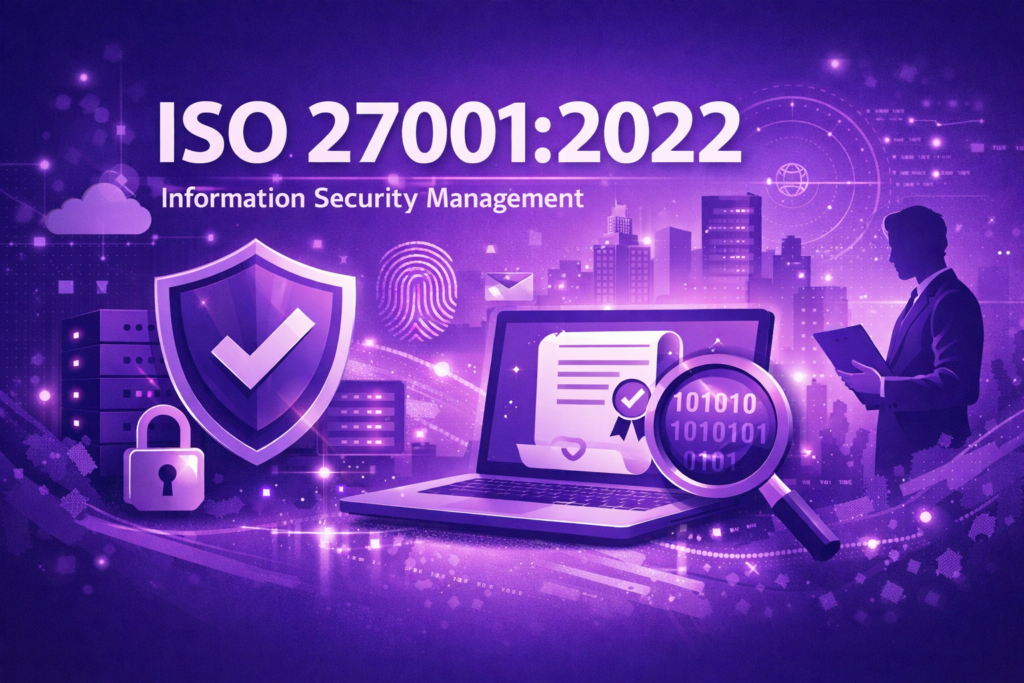
ISO 27001:2022 Explained – ISMS Guide, Certification, Cost & Benefits (2026)

ISO 27001:2022 Explained – ISMS Guide, Certification, Cost & Benefits (2026) In 2026, cyber threats are evolving faster than ever. Data breaches, ransomware attacks, insider threats, and regulatory penalties are becoming a serious concern for businesses of all sizes. Organizations are no longer asking whether security is important they are asking how to prove it to clients, partners, and regulators. This is where ISO 27001:2022 plays a critical role. It is not just a compliance requirement but a strategic framework that helps businesses systematically protect sensitive data, manage risks, and build long-term trust. ISO 27001:2022 is a globally recognized standard that enables organizations to establish a strong Information Security Management System (ISMS), ensuring data confidentiality, integrity, and availability. What is ISO 27001:2022? ISO 27001:2022 is an international standard designed to help organizations manage information security risks through a structured and risk-based approach. It provides a set of requirements for establishing, implementing, maintaining, and continuously improving an Information Security Management System (ISMS). The standard ensures that organizations protect three core principles of information security: Confidentiality – Ensuring data is accessible only to authorized individuals Integrity – Maintaining the accuracy and completeness of data Availability – Ensuring data is accessible when needed What is an ISMS? An Information Security Management System (ISMS) is a structured framework that combines policies, processes, technologies, and controls to manage and protect sensitive information. It helps organizations identify potential risks, implement security controls, and continuously monitor and improve their security posture. An effective ISMS includes: Security policies and procedures Risk assessment methodologies Access control mechanisms Incident management processes Monitoring and auditing systems Why ISO 27001:2022 is Important in 2026 With increasing cyber threats and strict compliance requirements, ISO 27001 has become essential for organizations that want to stay competitive and secure. Protects sensitive data such as customer, financial, and intellectual property Builds trust with clients, investors, and stakeholders Enables businesses to win enterprise and global contracts Helps meet regulatory requirements like GDPR, RBI, and SEBI Reduces the risk of cyberattacks and data breaches Improves overall operational resilience ISO 27001:2022 vs 2013 – What Changed? The 2022 version introduces modern security practices and aligns with today’s technology landscape. Controls reduced from 114 to 93 for better efficiency Controls reorganized into four categories Increased focus on cloud security and remote environments Introduction of threat intelligence practices Enhanced emphasis on secure coding and data protection ISO 27001 Controls Overview The standard includes 93 controls grouped into four categories: Organizational Controls – Policies, governance, and risk management People Controls – Employee awareness and training Physical Controls – Security of physical assets and infrastructure Technological Controls – IT security, encryption, and monitoring How ISO 27001 Works (PDCA Cycle) ISO 27001 follows a continuous improvement model known as the PDCA cycle: Plan – Identify risks and define security policies Do – Implement controls and processes Check – Monitor performance and conduct audits Act – Improve and optimize the system continuously ISO 27001 Certification Process A streamlined journey from risk assessment to certification. 1 Scope Define ISMS 2 Risk Identify threats 3 Docs Policies 4 Controls Apply 5 Audit Internal 6 Review Management 7 External Audit 8 Certified Achieve ISO Need Help with ISO 27001:2022 Implementation? Our experts help you implement ISMS, conduct risk assessments, and achieve certification faster. Book Free Consultation ISO 27001 Certification Cost in India The cost typically ranges between ₹3 lakh to ₹15 lakh, depending on several factors: Company size and number of employees Number of office locations IT infrastructure complexity Consulting and audit fees Security tools and technologies used Common ISO 27001 Implementation Mistakes Ignoring proper risk assessment Using generic or copied documentation Lack of management involvement No continuous monitoring or improvement Treating ISO certification as a one-time project Who Needs ISO 27001 Certification? Any organization handling sensitive data can benefit from ISO 27001 certification. SaaS and technology companies Fintech and BFSI organizations Healthcare providers E-commerce businesses IT service providers Government contractors Tools and Technologies Used Risk management platforms SIEM solutions Vulnerability scanners Access control systems Cloud security tools (AWS, Azure) Real-World Example A SaaS company handling sensitive customer data implemented ISO 27001 and achieved: 60% reduction in security incidents Faster enterprise deal closures Improved compliance and audit readiness FAQs How long does ISO 27001 certification take? Typically 3–6 months depending on organization size and readiness. Is ISO 27001 mandatory? No, but it is often required for enterprise contracts and compliance. What is a Statement of Applicability (SoA)? A document that lists applicable controls and justifies inclusion or exclusion. What is Annex A? Annex A includes 93 security controls used to manage risks. Recent Posts April 14, 2026 ISO 27001:2022 Explained – ISMS Guide, Certification, Cost & Benefits (2026) April 7, 2026 DPDP Act 2023 Compliance for Organizations: Step-by-Step Guide, Importance, Penalties & Implementation Roadmap March 31, 2026 The Growing Importance of Robot Penetration Testing in Automated Industries March 24, 2026 What is a Cloud Security Assessment and Why Does Your Business Need One? March 17, 2026 How Penetration Testing Can Improve Your Business’s Cybersecurity Culture March 10, 2026 How Network Security Assessments Saved Businesses from Cyber Attacks March 3, 2026 How Geopolitical Conflicts Increase Cyber Risk for Indian Businesses February 24, 2026 AI Innovation vs Cyber Risk: What Businesses Must Learn from the 2026 AI Summit February 14, 2026 7 Cybersecurity Gaps Regulators Flag During VAPT Audits February 10, 2026 Why Vendor Risk Is the Biggest Compliance Failure in 2026 Categories Cyber Security Security Operations Center Cloud Security Case Study Technology Trends Don’t Let Cyber Risks Disrupt Your Business Growth Certified Cybersecurity & Compliance Experts: 12+ years of industry experience delivering VAPT, ISO 27001, SOC 2, and regulatory compliance aligned with global standards. Proven Real-World Cyber Expertise: 850+ cybercrime cases investigated and 1500+ cybersecurity audits conducted across enterprises and regulated industries. Strengthening People, Processes & Technology: 4500+ cybersecurity awareness sessions delivered to reduce human-layer risks and improve organizational cybersecurity. End-to-End Security Partner: From advanced penetration testing to global compliance frameworks, Lumiverse Solutions ensuring businesses stay secure, compliant,

ISO 27001:2022 Explained – ISMS Guide, Certification, Cost & Benefits (2026) Read More »

DPDP Act 2023

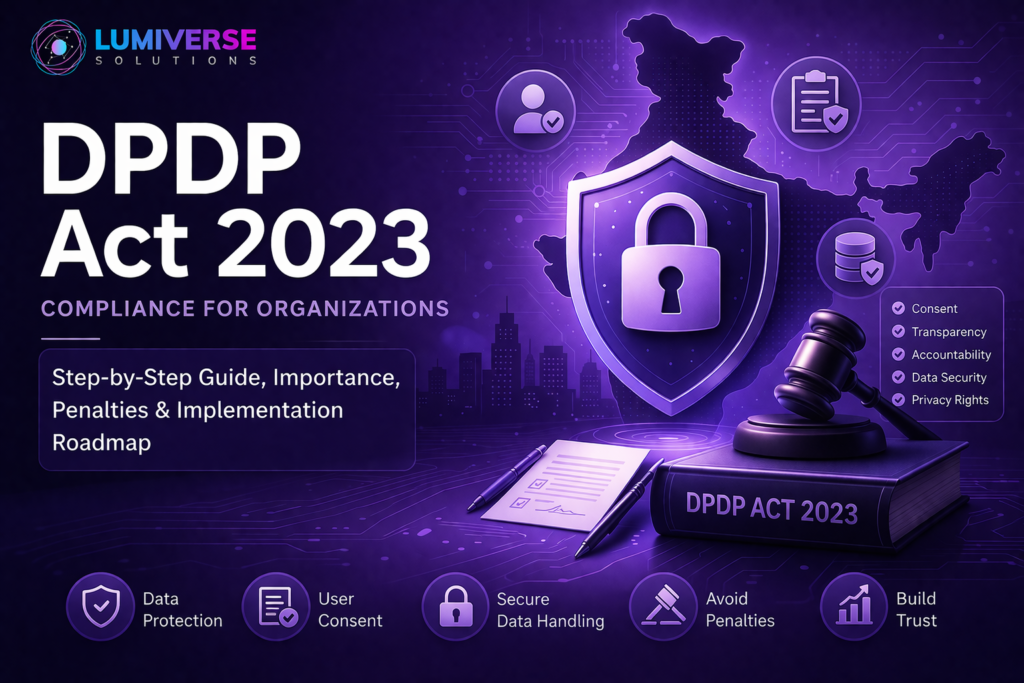
DPDP Act 2023 Compliance for Organizations: Step-by-Step Guide, Importance, Penalties & Implementation Roadmap

DPDP Act 2023 Compliance for Organizations: Step-by-Step Guide, Importance, Penalties & Implementation Roadmap Introduction: Data is the New Asset But Also the Biggest Risk Every organization today collects, processes, and stores personal data whether it’s customer details, employee records, or user behavior analytics. But with growing digital adoption, data misuse, breaches, and privacy violations have increased significantly. To address this, the Government of India introduced the Digital Personal Data Protection (DPDP) Act 2023, a landmark regulation designed to protect personal data and hold organizations accountable. For businesses, this is not just a legal requirement, it’s a trust-building and risk management necessity. What is the DPDP Act 2023? The DPDP Act 2023 is India’s data protection law that regulates how organizations collect, process, store, and protect personal data of individuals, ensuring privacy rights and imposing strict compliance obligations on businesses. Why DPDP Compliance is Important for Organizations 💡 Why is DPDP compliance necessary? DPDP compliance is necessary to protect personal data, avoid legal penalties, build customer trust, and ensure secure data handling practices within organizations. Key Reasons: 1. Legal Obligation Non-compliance can result in heavy penalties and legal consequences 2. Customer Trust & Brand Reputation Consumers are becoming privacy-aware data protection builds credibility and loyalty 3. Risk Reduction Minimizes chances of: Data breaches Insider threats Unauthorized access 4. Competitive Advantage Organizations with strong compliance frameworks are preferred by clients and partners Who Needs to Comply with the DPDP Act? 💡 Who is required to comply with DPDP? Any organization that processes personal data of individuals in India, including businesses, startups, SaaS companies, and global firms handling Indian user data, must comply with the DPDP Act. Applicable to: Startups & SMEs | Enterprises | SaaS & Tech companies | E-commerce platforms | Healthcare organizations | Financial institutions 👉 Even foreign companies handling Indian user data must comply. Key Principles of the DPDP Act Understanding these principles is critical: Consent-based data processing Purpose limitation Data minimization Accuracy of data Storage limitation Accountability of data fiduciaries What Happens If You Are Not DPDP Compliant? 💡 What are DPDP penalties? Organizations can face penalties up to ₹250 crore per violation for failing to protect personal data, mishandling user consent, or violating DPDP regulations. Risks of Non-Compliance: Financial penalties (up to ₹250 crore) Legal actions & investigations Loss of customer trust Business disruption Reputational damage 👉 Compliance is far cheaper than a breach. Stages of DPDP Compliance: Step-by-Step Implementation Roadmap Here’s how organizations can become fully compliant: Stage 1: Data Discovery & Mapping 💡 What is data discovery in DPDP? Data discovery involves identifying what personal data your organization collects, where it is stored, how it is processed, and who has access to it. Actions: Identify all data sources Map data flow across systems Classify sensitive vs non-sensitive data Stage 2: Data Audit & Risk Assessment 💡 Why is data audit important? A data audit helps identify vulnerabilities, compliance gaps, and risks in how personal data is handled within the organization. Actions: Conduct VAPT & security audits Identify weak access controls Evaluate third-party risks Stage 3: Consent Management Implementation 💡 What is consent management? Consent management ensures users explicitly approve how their data is collected and used, in a transparent and compliant manner. Actions: Update privacy policies Implement consent banners Enable consent withdrawal mechanisms Stage 4: Data Protection Controls 💡 How to secure personal data under DPDP? Organizations must implement encryption, access controls, monitoring systems, and secure storage practices to protect personal data. Actions: Encrypt sensitive data Implement role-based access Enable endpoint and network security Stage 5: Incident Response & Breach Management 💡 What to do in case of a data breach? Organizations must promptly detect, report, and mitigate data breaches while notifying authorities and affected users as per DPDP guidelines. Actions: Create incident response plan Define breach reporting process Conduct simulations Stage 6: Compliance Monitoring & Governance 💡 How to maintain DPDP compliance? Continuous monitoring, audits, employee training, and governance frameworks help maintain long-term DPDP compliance. Actions: Regular audits Employee training programs Appoint Data Protection Officer (if required) Best Practices to Become DPDP Compliant 💡 Best ways to achieve DPDP compliance Conduct regular data audits Implement strong access controls Train employees on data privacy Monitor systems continuously Partner with cybersecurity experts Practical Tips: Adopt Zero Trust security model Use AI-driven monitoring tools Limit data collection to necessity Secure APIs and cloud systems Real-World Use Case Example: E-commerce Company Collects customer data (name, address, payment info) Implements consent-based checkout Encrypts payment data Conducts regular VAPT testing 👉 Result: Reduced breach risk + improved customer trust How Lumiverse Solutions Helps You Achieve DPDP Compliance At Lumiverse Solutions, we simplify compliance with a structured, end-to-end approach. Our Services Include: DPDP readiness assessment Data discovery & risk analysis VAPT & security testing Compliance framework implementation Continuous monitoring & support 👉 We don’t just audit we secure, implement, and optimize. FAQs 1. What is DPDP compliance? DPDP compliance refers to following India’s data protection regulations to securely collect, process, and store personal data. 2. Is DPDP applicable to small businesses? Yes, any business handling personal data of Indian users must comply, regardless of size. 3. What is the penalty for DPDP violation? Penalties can go up to ₹250 crore depending on the severity of the violation. 4. How long does it take to become DPDP compliant? It depends on organization size but typically ranges from a few weeks to several months. 5. Can DPDP compliance prevent data breaches? It significantly reduces risks but must be combined with strong cybersecurity practices. Compliance is Not Optional It’s Strategic The DPDP Act 2023 marks a major shift in how organizations handle data. Businesses that: Act early Build strong data governance Invest in cybersecurity …will not only avoid penalties but also gain customer trust and market advantage. Take the Next Step with Lumiverse Solutions Don’t wait for a breach or penalty to take action. 🔐 Secure your data 📊 Ensure compliance ⚡ Build customer trust 👉 Get your DPDP Compliance Assessment today Recent

DPDP Act 2023 Compliance for Organizations: Step-by-Step Guide, Importance, Penalties & Implementation Roadmap Read More »

The Growing Importance of Robot Penetration Testing in Automated Industries

The Growing Importance of Robot Penetration Testing in Automated Industries Automation is Powerful But Is It Secure? Automation is no longer the future, it’s the present. From robotic arms assembling cars to surgical robots assisting doctors and AI-driven warehouse systems managing inventory, robotics is transforming industries at an unprecedented scale. Businesses are achieving higher efficiency, precision, and scalability but there’s a hidden risk. 👉 Every connected robot is also a potential entry point for cyberattacks. As industries become more interconnected, cybercriminals are shifting focus toward robotic systems, industrial control systems (ICS), and IoT-enabled automation environments. A single vulnerability can disrupt operations, compromise safety, or lead to massive financial losses. This is where robot penetration testing becomes essential, not optional. At Lumiverse Solutions, we help organizations identify, test, and eliminate vulnerabilities in robotic ecosystems, ensuring they remain secure, resilient, and future-ready. What is Robot Penetration Testing? Robot penetration testing is a simulated cyberattack conducted on robotic systems, networks, and connected infrastructure to identify vulnerabilities in hardware, software, and communication protocols before attackers can exploit them. Why Robot Penetration Testing is Critical in 2026 and Beyond As automation scales, so does the attack surface. Modern robotic systems are: Connected to cloud platforms Integrated with enterprise networks Controlled via APIs and remote systems Dependent on real-time data exchange Robot penetration testing helps organizations proactively detect vulnerabilities, prevent cyberattacks, ensure operational continuity, and protect sensitive data and infrastructure. Top Industries Where Robot Penetration Testing is Essential 1. Manufacturing: Securing Smart Factories Modern manufacturing relies heavily on industrial robots and smart production lines. Risks: Production shutdowns Tampered product quality Supply chain disruptions Example: A compromised robotic arm could alter product specifications, leading to defective outputs and recalls. How penetration testing helps: Detects insecure communication protocols Identifies firmware vulnerabilities Secures industrial control systems (ICS) 2. Healthcare: Protecting Lives, Not Just Data Healthcare robotics from surgical robots to rehabilitation devices plays a critical role in patient outcomes. Risks: Unauthorized control of medical robots Exposure of sensitive patient data Disruption of life-saving procedures 💡 Why is cybersecurity critical in healthcare robotics? Cybersecurity in healthcare robotics is crucial because compromised systems can directly impact patient safety, disrupt medical procedures, and expose highly sensitive health data. Real-world relevance: Imagine a surgical robot being manipulated remotely—this is not hypothetical anymore. 3. Logistics & Supply Chain: Securing Automated Operations Warehouses and logistics hubs now depend on: Autonomous robots AI-driven inventory systems Smart delivery networks Risks: Inventory theft Operational delays Data breaches How penetration testing helps: Identifies entry points in warehouse systems Secures API integrations Prevents unauthorized system access Key Vulnerabilities in Robotic Systems Weak authentication Unsecured APIs Outdated firmware Unencrypted communication Network misconfigurations Key Benefits of Robot Penetration Testing Proactive risk detection Reduced downtime Compliance readiness Improved resilience Business continuity How Robot Penetration Testing Works Reconnaissance Vulnerability assessment Attack simulation Risk analysis Reporting & remediation Emerging Cybersecurity Trends AI-driven threat detection Zero Trust architecture Secure-by-design robotics Blockchain communication 5G security risks Why Choose Lumiverse Solutions Advanced threat detection End-to-end testing Industry-specific strategies Real-world simulations Continuous monitoring Secure Your Robotic Systems Today 🔐 Identify risks before attackers do and build a future-ready cybersecurity framework. Get Started Compliance Organizations must align with cybersecurity compliance services. Follow standards like: NIST, OWASP, ISO 27001. FAQs What is robot penetration testing? Robot penetration testing is a security assessment that simulates cyberattacks on robotic systems to identify and fix vulnerabilities. Why do robotic systems need cybersecurity? Robotic systems are connected to networks and software, making them vulnerable to cyberattacks that can disrupt operations and compromise safety. Which industries need robot penetration testing the most? Manufacturing, healthcare, and logistics are the top industries that rely heavily on robotics and require strong cybersecurity measures. How often should robot penetration testing be performed? Manufacturing, healthcare, and logistics. Can robot penetration testing prevent cyberattacks? While it cannot eliminate all risks, it significantly reduces vulnerabilities and strengthens defense mechanisms against cyber threats. Secure Automation is the Future Automation is accelerating but so are cyber threats. Operational disruption Financial loss Reputational damage 👉 Be proactive, not reactive. Take the Next Step with Lumiverse Solutions 🔐 Secure your robotic systems📊 Identify risks before attackers do ⚡ Build a future-ready cybersecurity framework Get Started 📞 +91 80106 33667 🌐 lumiversesolutions.online Recent Posts March 24, 2026 What is a Cloud Security Assessment and Why Does Your Business Need One? March 17, 2026 How Penetration Testing Can Improve Your Business’s Cybersecurity Culture March 10, 2026 How Network Security Assessments Saved Businesses from Cyber Attacks March 3, 2026 How Geopolitical Conflicts Increase Cyber Risk for Indian Businesses February 24, 2026 AI Innovation vs Cyber Risk: What Businesses Must Learn from the 2026 AI Summit February 14, 2026 7 Cybersecurity Gaps Regulators Flag During VAPT Audits February 10, 2026 Why Vendor Risk Is the Biggest Compliance Failure in 2026 February 3, 2026 Cybersecurity Compliance in 2026: Why Continuous Audits Have Replaced Annual Checks January 21, 2026 From CSCRF to DPDP: The Growing Link Between Cybersecurity and Data Privacy in 2026 December 12, 2025 SEBI CSCRF Audit: Why You Must Be Ready For 2026 Categories Cyber Security Security Operations Center Cloud Security Case Study Technology Trends Don’t Let Cyber Risks Disrupt Your Business Growth Certified Cybersecurity & Compliance Experts: 12+ years of industry experience delivering VAPT, ISO 27001, SOC 2, and regulatory compliance aligned with global standards. Proven Real-World Cyber Expertise: 850+ cybercrime cases investigated and 1500+ cybersecurity audits conducted across enterprises and regulated industries. Strengthening People, Processes & Technology: 4500+ cybersecurity awareness sessions delivered to reduce human-layer risks and improve organizational cybersecurity. End-to-End Security Partner: From advanced penetration testing to global compliance frameworks, Lumiverse Solutions ensuring businesses stay secure, compliant, and confidently future-ready. Secure. Comply. Scale with Confidence. Book Your free Consultation → India: +91 77986 60940 / +91 7397 882 579 UAE: +971 58 585 6233

The Growing Importance of Robot Penetration Testing in Automated Industries Read More »

AI Innovation vs Cyber Risk: What Businesses Must Learn from the 2026 AI Summit

AI Innovation vs Cyber Risk: What Businesses Must Learn from the 2026 AI Summit The 2026 AI Summit brought together industry leaders, cybersecurity experts, and AI innovators to address one of the most pressing challenges of our time: how to balance AI-driven innovation with emerging cyber risks. AI is reshaping business operations, workflows, and threat landscapes across industries. But with this transformation comes a new category of cyber risks that demand proactive defenses and strategic governance. 1. AI Is Accelerating Innovation Faster Than Regulations A major theme at the summit was the speed of AI adoption: AI tools are enabling automation, predictive analytics, threat detection, process optimization, and customer personalization. But regulatory frameworks such as data privacy, AI ethics, and cybersecurity requirements are struggling to keep pace. Businesses must understand that innovation without guardrails can create vulnerabilities, especially when AI systems interact with sensitive data or automate critical decisions. Action for businesses: Establish clear governance policies for AI initiatives to ensure compliance and safety from the outset. 2. AI Is Both a Cyber Defense Tool and a Cyber Threat Multiplier Summit experts emphasized a dual reality: AI strengthens cyber defense by: Detecting anomalies faster than traditional tools Reducing response times Predicting attack patterns Automating threat hunting But AI also empowers attackers to: Create adaptive malware Automate phishing attacks at scale Generate deepfakes for social engineering Bypass legacy detection systems The takeaway? AI alone is not enough: Human + AI collaboration is the most effective defense. 3. AI Systems Must Be Designed with Security by Default Security cannot be an afterthought. The summit stressed: Integrating security into AI development lifecycles Performing continuous testing of models (e.g., adversarial testing) Monitoring model inputs and outputs for anomalies Ensuring AI models are resilient against data poisoning and manipulation AI that learns from unsafe or manipulated data can behave unpredictably, creating new risk channels. Action for businesses: Pair AI development with cybersecurity teams from day one. 4. Explainability and Transparency Are Now Strategic Priorities Black-box AI models make decisions that are hard to interpret. Regulators and clients alike demand explainable AI. Lack of transparency increases compliance risk Complex AI decisions without audit trails raise governance concerns 2026 strategy must include explainability standards, especially for systems impacting finance, healthcare, or personal data. 5. AI Governance Frameworks Are Critical Clear policies on data usage and model training Defined roles and responsibilities Risk assessment procedures Incident escalation paths for AI systems Documentation and auditability 6. The Human Factor Still Matters Most Most breaches still occur due to human error Employee social engineering remains a top attack vector Cultural training and awareness are essential Action for businesses: Invest in continuous cyber awareness training tailored to AI-related risks. 7. Collaboration Across Sectors Is No Longer Optional Businesses Governments Cybersecurity industry AI developers Academia Cyber Risk Lessons Every Business Must Apply Now Lesson 1: AI risk is systemic, not technical Lesson 2: Reactive cybersecurity is outdated Lesson 3: Governance and ethics must align How Lumiverse Solutions Helps Balance AI Innovation and Cyber Risk We help you innovate securely, not just quickly. Connect With Lumiverse Solutions Conclusion The 2026 AI Summit underscored a clear reality: AI innovation and cyber risk are two sides of the same coin. FAQ Section Q1. What was the key takeaway from the 2026 AI Summit regarding cybersecurity? ▾ The main takeaway was that AI innovation must be paired with strong cybersecurity governance. Businesses must balance rapid AI adoption with proactive risk management. Q2. How does AI increase cyber risk for businesses? ▾ AI can introduce risks such as automated attacks, deepfake fraud, data poisoning, and model manipulation if systems are not properly secured and monitored. Q3. Can AI improve cybersecurity defenses? ▾ Yes. AI enhances cybersecurity by enabling predictive threat detection, faster incident response, anomaly detection, and automated monitoring. Recent Posts February 24, 2026 AI Innovation vs Cyber Risk: What Businesses Must Learn from the 2026 AI Summit February 14, 2026 7 Cybersecurity Gaps Regulators Flag During VAPT Audits February 10, 2026 Why Vendor Risk Is the Biggest Compliance Failure in 2026 February 3, 2026 Cybersecurity Compliance in 2026: Why Continuous Audits Have Replaced Annual Checks January 21, 2026 From CSCRF to DPDP: The Growing Link Between Cybersecurity and Data Privacy in 2026 December 12, 2025 SEBI CSCRF Audit: Why You Must Be Ready For 2026 December 6, 2025 Why Every Business Needs a Red Team Assessment | Strengthening Cybersecurity November 27, 2025 What Is IRDAI ISNP Audit? A Simple Guide for Insurers November 18, 2025 Understanding DPDP 2025 Rules: Key Changes, Compliance Requirements, and Next Steps November 1, 2025 Top 10 VAPT Best Practices for 2025: What Organisations Should Be Doing Now Categories Cyber Security Security Operations Center Cloud Security Case Study Technology Trends Don’t Let Cyber Risks Disrupt Your Business Growth Certified Cybersecurity & Compliance Experts: 12+ years of industry experience delivering VAPT, ISO 27001, SOC 2, and regulatory compliance aligned with global standards. Proven Real-World Cyber Expertise: 850+ cybercrime cases investigated and 1500+ cybersecurity audits conducted across enterprises and regulated industries. Strengthening People, Processes & Technology: 4500+ cybersecurity awareness sessions delivered to reduce human-layer risks and improve organizational cybersecurity. End-to-End Security Partner: From advanced penetration testing to global compliance frameworks, Lumiverse Solutions ensuring businesses stay secure, compliant, and confidently future-ready. Secure. Comply. Scale with Confidence. Book Your free Consultation → India: +91 77986 60940 / +91 7397 882 579 UAE: +971 58 585 6233 Tell Us Your Opinion We value your perspective! Share your thoughts, feedback, or questions below. Your opinion matters and helps create a richer, more engaging conversation. Let’s connect and hear what you think about this post!

AI Innovation vs Cyber Risk: What Businesses Must Learn from the 2026 AI Summit Read More »

7 Cybersecurity Gaps Regulators Flag During VAPT Audits

7 Cybersecurity Gaps Regulators Flag During VAPT Audits Vulnerability Assessment and Penetration Testing (VAPT) has become a core regulatory requirement across industries in 2026. Regulators no longer view VAPT as a one-time technical exercise; they use it as a measure of an organization’s security maturity, governance, and remediation discipline. Despite regular testing, many organizations continue to receive adverse observations during regulatory and internal audits. The issue is rarely the absence of a VAPT report; it is the gaps revealed around how vulnerabilities are handled. This blog explains the seven most common cybersecurity gaps regulators flag during VAPT audits and why fixing them is critical for compliance and resilience. 1. Critical Vulnerabilities Left Unpatched The most frequent and serious gap is the presence of open critical or high-risk vulnerabilities. Known vulnerabilities left unresolved for months No defined patching timelines Lack of ownership for remediation In 2026, regulators expect time-bound closure, not just identification. Leaving critical issues open is treated as a governance failure, not a technical oversight. 2. VAPT Reports Without Remediation Evidence Many organizations submit VAPT reports but fail to provide proof of remediation. No screenshots or logs showing fixes No re-testing evidence No sign-off from system owners Regulators assess the full remediation lifecycle, not just the test results. Without closure evidence, vulnerabilities are considered unresolved. 3. Limited Scope of VAPT Testing Another major gap is incomplete VAPT coverage. Cloud environments are excluded APIs are not tested External-facing applications are missed Internal lateral movement is not assessed In 2026, regulators expect VAPT to cover all critical assets, including cloud, SaaS, APIs, and third-party integrations. 4. Repeat Findings Across Multiple VAPT Cycles Repeated vulnerabilities across consecutive VAPT audits signal deeper problems. This indicates: Weak root-cause analysis Temporary fixes instead of permanent remediation Poor secure development practices Regulators view repeat findings as a sign of ineffective security governance, even if testing is performed regularly. 5. Absence of Risk-Based Prioritization Not all vulnerabilities carry the same risk, yet many organizations treat them equally or ignore prioritization altogether. No risk scoring aligned with business impact Delayed remediation of exploitable vulnerabilities No linkage between vulnerabilities and critical systems In 2026, regulators expect a risk-based remediation approach, focusing first on vulnerabilities that impact sensitive data and core operations. 6. VAPT Performed as a Compliance Checkbox Regulators increasingly flag organizations that treat VAPT as a “tick-box” requirement. Same test methodology every year No contextual analysis of threats No alignment with incident trends or attack scenarios VAPT is expected to evolve with the threat landscape. Static testing models no longer meet regulatory expectations. 7. Weak Integration Between VAPT and Incident Response One of the most overlooked gaps is the lack of integration between VAPT findings and incident response planning. Vulnerabilities not mapped to attack scenarios Incident response plans not updated based on VAPT outcomes No tabletop exercises linked to identified risks In 2026, regulators expect organizations to use VAPT results to improve real-world attack readiness, not just security scores. Why These VAPT Gaps Matter More in 2026 Regulators now use VAPT audits to assess security accountability, response readiness, risk management maturity, and ongoing compliance discipline. Unresolved VAPT gaps increase the likelihood of regulatory observations, repeat audits, penalties, and operational disruptions. VAPT outcomes directly influence compliance confidence. Conclusion In 2026, regulators are not asking whether VAPT was conducted, they are asking how effectively vulnerabilities were managed. Addressing these seven common gaps can significantly reduce audit findings and strengthen cyber resilience. Strengthen Your VAPT Readiness in 2026 Connect with Lumiverse Solutions to strengthen your VAPT program, close audit gaps, and stay compliant throughout 2026. Connect With Lumiverse Frequently Asked Questions Q1. What is a VAPT audit? A VAPT audit evaluates an organization’s systems to identify security vulnerabilities and test how effectively they can be exploited by attackers. Q2. Why do regulators focus heavily on VAPT audits? Regulators use VAPT audits to assess real-world security readiness, remediation discipline, and an organization’s ability to prevent cyber incidents. Q3. What is the most common issue found during VAPT audits? The most common issue is critical vulnerabilities remaining unpatched despite being identified in previous assessments. Q4. Is performing VAPT enough for compliance in 2026? No. Regulators expect complete remediation, re-testing, and documented evidence, not just a VAPT report. Q5. How often should VAPT be conducted? Most organizations conduct VAPT annually, but regulators in 2026 expect more frequent testing, especially after major system or infrastructure changes. Q6. Do regulators check VAPT remediation evidence? Yes. Auditors review screenshots, logs, patch records, and re-test reports to confirm vulnerabilities are fully resolved. Q7. Why are repeat VAPT findings a red flag? Repeat findings indicate weak governance, ineffective root-cause analysis, and poor security control implementation. Q8. Does VAPT need to include cloud and APIs? Yes. In 2026, regulators expect VAPT to cover cloud environments, APIs, web applications, and external-facing systems. Q9. How does VAPT relate to incident response readiness? VAPT findings should be used to strengthen incident response plans and simulate realistic attack scenarios during drills. Q10. How can Lumiverse Solutions help with VAPT compliance? Lumiverse provides comprehensive VAPT, remediation tracking, re-testing, audit-ready documentation, and alignment with regulatory expectations. Recent Posts February 14, 2026 7 Cybersecurity Gaps Regulators Flag During VAPT Audits February 10, 2026 Why Vendor Risk Is the Biggest Compliance Failure in 2026 February 3, 2026 Cybersecurity Compliance in 2026: Why Continuous Audits Have Replaced Annual Checks January 21, 2026 From CSCRF to DPDP: The Growing Link Between Cybersecurity and Data Privacy in 2026 December 12, 2025 SEBI CSCRF Audit: Why You Must Be Ready For 2026 December 6, 2025 Why Every Business Needs a Red Team Assessment | Strengthening Cybersecurity November 27, 2025 What Is IRDAI ISNP Audit? A Simple Guide for Insurers November 18, 2025 Understanding DPDP 2025 Rules: Key Changes, Compliance Requirements, and Next Steps November 1, 2025 Top 10 VAPT Best Practices for 2025: What Organisations Should Be Doing Now October 29, 2025 How to Get STQC GIGW 3.0 Certification | Complete Audit & Compliance Process Explained Categories Cyber Security Security Operations

7 Cybersecurity Gaps Regulators Flag During VAPT Audits Read More »